
 CHILDREN'S LITERATURE JOURNEYS:
Exploring England's
Kiddie Lit Roots
CHILDREN'S LITERATURE JOURNEYS:
Exploring England's
Kiddie Lit Roots
"There was a crooked man
Who walked a crooked mile.
He found a crooked six-pence
Upon a crooked style.
He bought a crooked cat
Who caught a crooked mouse,
And they all lived together
In a crooked little house."
Day One. So, why was I spending December 31st on a plane over the Atlantic Ocean toasting the New Year with fellow passengers from a miniature plastic goblet of champaigne--on my way to England for going on two weeks? Well, . . . the plane tickets were cheap, for one thing. There would be no crowds (a huge draw in itself), and I might even be able to enjoy holiday decorations that should still be decorating the English countryside at least until Twelfth Night. My main purpose, however, was to explore the English countryside from a Children's Literature perspective. And I now share the results of that journey with you.
One flight through the night crossing the Atlantic Ocean, and several movies later, my husband and I arrived at Heathrow Airport, tired and cramped, but breakfasted and ready to pick up our rental auto. Our normal preference when visiting Europe is to travel by train. Trains are usually frequent and often and visit the smallest of towns--and are much better for the environment; but this time around we had decided to first travel to the less accessible places by car since it was winter, and trains, ferries, etc. would be less frequent than during tourist season. Our last few days in the London area we would travel by the London Underground, or the Tube as it is often called, as well as by bus and train. Although we would undoubtedly do some of the normal tourist activities, my hope was that every day we would be able to visit at least one or two sites or collections significant to the Children's Literature field.

Literally out of the airport gate, we headed straight for the Cots

wold region of England, with its gentle green hills, rushing streams, mix of deciduous woods and patchwork quilted fields edged in hedgerows, and its distinctive high plateaus known as
wolds. We lingered in several of its villages with their sandstone buildings reflecting the golden glow of the weak January sunlight, still remarkably green, despite this darkest time of year (shown left). We relaxed that first day: wandered through after Christmas sales, explored used bookstores and lingered over hot drinks in the local pub. I celebrated having a husband that enjoys driving enough to view driving on the left as a pleasant challenge. My job was to navigate our choice of destinations; and so we checked out a group of villages with other-wordly names such as Moreton-in-Marsh, Stow-on-the-Wold, Chipping Campden, or Chipping Norton, each of these villages just a few kilometers of pristine countryside from the next. One particularly quaint village was B

ourton-on-the-Water, bisected by the River Windrush that is crossed by many picturesque low stone pedestrian bridges.
We became reacquainted with the British use of roundabouts on their country highways--a road feature never fully understood by U.S. Citizens, due to their limited use here--used some in New England--but a feature to which we had become accustomed and liked (from previous trips to the U.K.), since one didn't have to constantly stop at lights, and if you missed a turn, you would just come around to that turn again--they seemed a logical use of a small amount of space compared to the much larger cloverleafs often used on the other side of the Atlantic.
One of the villages we vis

ited, Bibury, judged by Pre-

Raphaelite Artist/Designer and book illustrator/designer William Morris (1834-1896) as the "most beautiful" English village, was unquestionably charming, as was Broadway, another village admired by Morris (left,
The Complete Canterbury Tales, exquisitely designed inside and out by Morris and Edward Burne-Jones. Below, Morris picture). In fact, Morris' open admiration for the C

otswold's in the 19th century led to an invasion by artists from that time onward. Morris himself attended nearby Oxford and lived in Kelmscott Manor in the Cotswolds from 1871 until his death. While Cotswold towns were often lively , they were not crowded with tourists at all during this time of year (they often are so overwhelmed during summer holiday as to make tourist books suggest avoiding them altogether). Village activity during our visit was generated by the locals who would hike from village to village along public footpaths or right-of-way, crossing

fields, climbing or passing through "crooked styles" (shown left, one of many styles of a "style" or kissing gate), ending up in a favorit

e pub for the evening. It was inspiring to watch whole groups hiking in their Wellington Boots, hiking sticks and overcoats. "We have got to do one of these hikes," I told my husband immediately (moi, shown above left, next to a public footpath sign). And if, when you visit England, you, too, are interested, you can easily hike the multitude of public paths that are clearly marked and crisscross the country, since brochures with maps and directions to the many paths are available at Tourist Information sites, and several helpful websites exist on the subject, such as:
http://www.ramblers.org.uk/footpaths/ . And,


if you didn't bring Wellingtons, they're reasonably priced and in practically every store you enter (You can even book entire walking tours).
For a map of the Cotswolds and a list of attractions visit
http://www.britainexpress.com/Where_to_go_in_Britain/Maps/Cotswolds.htm
You cannot help but feel, as you stride along over field, through wood and over stream, breathing great gulps of bracing air (remember, it
is January) as you absorb the beauty of the English countryside, that this is the land of Kenneth


Grahame (1879-1976, pictured right) and of his 1908 classic
The Wind and the Willows (first edition pictured left). This is the land of Mole and Water Rat, B

adger and Mr. Toad of Toad Hall as Ernest Shepar


d (below) envisioned them for us, or as A. A. Milne (portrait shown right) adapted to stage for us in
Toad of Toad Hall. Curiously, E. H. Shepard was born not a 1/2 mile from A. A. Milne in St. John's Wood, London. To be continued . . . I'll wait to discuss that subject further until our days in Oxford and London are recounted (Shepard's illustrations were apparently approved and authorized by Grahame, though Grahame died before their completion and publication in 1931. E. H. Shepard's grave at Lodsworth Church, shown above left. Mr. Toad sketch left). ).
One interesting interconnection between the Milne and Shepard families, however, is that Shepard's two children, Graham and Mary, accompanied Shepard in 1926 on his sketching trips to A. A. Milne's home in the Ashdown Forest, Sussex, where the children played with Christopher Robbin. According to
The Independent (as quoted in the
Oxford Dictionary of National Biography), Mary felt that Christopher reacted as though he had never known "anyone older than himself actually playing games with him." What makes this interesting is that Mary Shepard (who would have been 17 years old at the time of those sketching trips) is also a well-known illustrator in the Children's Book field. Mary Shepard trained under Henry Tonks and Randolph Schwabe in London. She worked as an artist, had two exhibitions in London, and won a prize for etching in Paris.
Making Connections:
About Mary Shepard .
. Mary (1909-2000) is best remembered for her

illustrations for P. L. Travers'
Mary Poppins classic children's books . When Pamela Travers, a then unknown Australian author, had her novel
Mary Poppins accepted for publication, she and her publisher, Gerald Howe, hoped that E. H. Shepard would be its illustrator, but he had too much of a workload at the time. P. L. Travers saw a Christmas card that Mary Shepard, then aged 23, had designed, and chose her to illustrate the book. P. L. Travers was quite particularly about the illustrations, insisting that the images of Poppins resemble a peg doll she had owned as a child and "have no figure" (
Daily Telegraph). Mary Shepard's illustrations of Mary Poppins helped quintessentially define the character, and she subsequently illustrated all of the Mary Poppins books through the final
Mary Poppins in Cherry Tree Lane (1982). Mary Shepard went on to marry an editor of Punch, Edmund George Valpy Knox (1881-1971) and, although she had no children of her own, became a second mother to her two stepchildren, Rawle Knox, a journalist, and Penelope Fitzgerald, a well-known and award-winning novelist. They lived in St. John's Wood, London where, during the Second World War she was an air-raid warden, kept poultry, and had a Victory Garden. After the war her family moved to Hampstead.
About P. L. Travers. Helen Lyndon Goff (1899-1996), pseudonym P. L. Travers for Pamela Lyndon Travers, was one of three children born in Maryborough, Queensland, Australia to Travers Robert Goff, a London-born bank manager, and Margaret Morehead. To read about a Mary Poppins

Festival that has been started in her honor there, visit http://www.abc.net.au/widebay/

stories/s2047870.htm. In 1

924, P. L. Travers traveled to London, where she published poems in the Irish Statesman at the encouragement of editor, George Russell, traveled to Fontainebleau near Paris where she became a follower of Russian occultist George Ivanovich Gurdjieff, and to Switzerland to explore the teachings of psychologist Carl Jung. In the 1930s she lived in London and, at Pound Cottage, Mayfield, near Tunbridge Wells, worked as a drama critic and became close friends with George Russell and met poet William Butler Yeats. Travers' first book on Mary Poppins was published in 1934. It was translated into over 20 languages and became an instant classic of children's literature, although Travers disputed this

labeling of her Mary Poppin's novels as being exclusively for children. Goff led a private life and once said that she "most identified with Anonymous as a writer" (http://www.oxforddnb. com.proxy.library.vcu.edu/ view/article/62619). When asked

about her inspiration for her iconic Mary Poppins character, she asserted, "I never for one moment believed that I invented her. Perhaps she invented me" (Bergsten, 71). She never married, but did adopt a son, Dublin-born John Camillus Hone (b. 1939), son of Nathaniel and Biddy Hone and descendant of the 18th-century
painter Nathaniel Hone. Goff left for the United States in 1940 and lived there as a wartime evacuee until 1945. While there she traveled west by invitation of friend, John Collier, an administrator for Indian affairs, and stayed at a

number of Navaho, Hopi, and Pueblo reservations. Before leaving, she felt honored to be awarded a secret Pueblo name. Travers continued to publish stories, novels and essays. In 1964, Mary Poppins was adapted to a highly

successful Walt Disney movie starring Dick Van Dyke and Julie Andrews. Travers was not particularly pleased with the final product despite its success. From 1965 to 1977 again lived in the U.S. while working as a writer-in-residence at Radcliffe College and Smith College in Massachusetts, and as a Clark lecturer at Scripps College in Claremont, California. From 1976 until her death, Goff was a contributing editor to the American Journal,
Parabola: the Magazine of Myth and Tradition. In fact, her last published book is a collection of essays from that Journal and is entitled,
What the Bee Knows: Reflections on Myth, Symbol and Story, published in 1989. She died at her home at 29 Shawfield Street, Chelsea, London, on 23 April 1996, St. George's Day. At her request, the final resting place for her ashes remains unknown as she did not want the location to become a shrine for Mary Poppins fans.
The Mary Poppins Books: Mary Poppins, 1934; Revised Bad Tuesday Chapter; Mary Poppins Comes Back, 1935; Mary Poppins Opens the Door, 1943: Mary Poppins in the Park, 1952; Mary Poppins From A to Z, 1962; Mary Poppins in the Kitchen, 1975; Mary Poppins in Cherry Tree Lane, 1982; Mary Poppins and the House Next Door, 1988.

 Day 2.
Chester & the Birthplaces of Lewis Carroll & Randolph Caldecott
With plans to return to the Cotswold's and the Oxford area later in the trip, we set off on Day 2 for the North Country (bottom of map left) to visit a couple of birthplaces of two icons in the children's literature field near Chester, England near the border o
Day 2.
Chester & the Birthplaces of Lewis Carroll & Randolph Caldecott
With plans to return to the Cotswold's and the Oxford area later in the trip, we set off on Day 2 for the North Country (bottom of map left) to visit a couple of birthplaces of two icons in the children's literature field near Chester, England near the border o f Wales, 200 miles north of London and about 20 miles just south of Liverpool. Chester is a medieval walled city in the northwest of England (City Hall, pictured left, you can see it, the wall and the towering cathedral in the print of the city above). The entire city is a World Heritage Site as an excellent example of a walled city that has spanned several civilizations, is still intact and has been continuously inhabited. The Romans first built
 a walled fort city there in A.D. 79 in the area of the Cornovii tribe (Iron Age tribe whose name perhaps means "people of the horn"), so parts of its wall are Roman, although much of the wall has been rebuilt. Chester also boasts a Roman forum and an amphitheatre (pictured left) that is currently an archeological dig s
 ite. The city is surrounded by the River Dee estuary and still-functioning canals; and, upon our arrival and check-in to a conveniently located Victorian era hotel by the North City Gates, the first thing we did was to walk the 2 mile circuit at the top of the city wall, an exercise that afforded an inspiring view of the city. The wall has intermittent watch towers and stairs to the top of the wall, which has a walkway-width path popular with joggers as well as tourists (below, East Gate & East Gate Clock on top of wall). After an early dinner in a small Cafe, we explored an example of an early shopping mall--designed in the Victorian Era in Tudor style multi-level half-timbered structures with an actual two level balconied-shopping arcade design. The shopping arcade is still vibrant and very much in use, and, as it was still decorated in festive holiday lights, we enjoyed exploring it and the Cathedral, which had a memorial to Randolph Caldecott located in the North Transcept (memorial shown below, a memorial is also in St. Paul's Cathedral Crypt in London designed by Sir Alfred Gilbert, and as does a cemetery in St. Augustine Florida, where Caldecott died while in the U.S. in 1886, when he was not yet 40 years old).

 It was time,
 however, to search for Randolph Caldecott's birthplace (pictured right). The local library (located next to the magnificent Town Hall and across from the Cathedral in the center of the walled city) had a collection of his illustrated picture books, and also helpfully provided us with a street address. His house used to have been numbered #150 Bridge Street--however, there the problems began. Bridge Street had been sectioned into Upper and Lower Bridge Streets at some point since that time and the buildings along it had been renumbered as well. Consequently, we spent quite a bit of time trying to find his home's new number, #16, to no avail. We almost gave up, taking pictures of several building site possibilities and deciding that I could sort out the correct one later after more research.
 Curiously, when asking residents for help with directions (as I have just been doing in this picture, left), many people had no idea who Randolph Caldecott was at all. It felt a bit like people who live in NYC never visiting the Statue of Libery. Caldecott is so well-known in the United States, in part, perhaps, because such a significant award as the Caldecott Award, presented by the American Library Association yearly to the artist of the most distinguished American picturebook, is named for him (For information about the award and current and past winners, visit http://www.ala.org/ala/alsc/awardsscholarships/literaryawds/caldecottmedal/caldecottmedal.cfm). It was almost inconceivable to me that Caldecott's birthplace would not be clearly marked with street signs and on tourist maps (altho
 ugh, come to think of it, just a few years ago here in the United States, a Super Walmart was almost built on George Washington's boyhood ferry farm). Still, we could not find #16 Upper Bridge Street (formerly numbered 150), try as we might.
Finally, a gentleman in a travel bureau suggested that I try higher on the street, past another main crossing street and much further north than we had been previously directed, in the shopping arcade area--but not to forget to climb to the second level balcony and check those shop fronts as well. Success at last! On a second-level balcony, finally, a small round metal plaque marked an empty heavily beamed store front. There was no museu
ugh, come to think of it, just a few years ago here in the United States, a Super Walmart was almost built on George Washington's boyhood ferry farm). Still, we could not find #16 Upper Bridge Street (formerly numbered 150), try as we might.
Finally, a gentleman in a travel bureau suggested that I try higher on the street, past another main crossing street and much further north than we had been previously directed, in the shopping arcade area--but not to forget to climb to the second level balcony and check those shop fronts as well. Success at last! On a second-level balcony, finally, a small round metal plaque marked an empty heavily beamed store front. There was no museu m inside, nothing to celebrate his life and art--perhaps that will change in the future as interest in children's literature sites escalates--but, even so, I was thrilled to have found his birthplace, and several teenagers sitting there talking looked on with curiousity as my husband took a picture of me standing next to the plaque. I felt a bit like a detective who had successfully solved a case despite a lack of clues.
[TWO ADDED CALDECOTT NOTES: (1) Several days later, across from the British Museum in London, I accidentally ran into another "Randolph Caldecott lived here from . . ." blue historic marker plaques on a building (46 Great Russell Street). An unexpected moment of pleasure! and, (2) Interestingly, Randolph Caldecott is not buried in England, but in St. Augustine, Florida, an historic town of great charm on the Atlantic coast of the U.S. I have visited St. Augustine several times and will again, at which time I will look for his grave marker. I did find this notation on the installation of a special literary marker on his grave:
_________________________________________________________________________________
"
|
Special Meeting
The Randolph Caldecott Society of America
March 20, 2005 at 3:00pm
Literary Landmark Ceremony at Evergreen Cemetery, co-sponsored with the Friends of the Library of St. Johns County
PHOTOS AVAILABLE HERE
The Friends of the Library of St. Johns County, Inc. and the Randolph Caldecott Society of America held a joint ceremony to designate the burial site of Randolph Caldecott, 1846-1886, English illustrator, artist, and sculptor, buried in Evergreen Cemetery, as a Literary Landmark site.
The Literary Landmarks Association was founded in 1986 by a former president of Friends of Libraries U. S. A. (FOLUSA) to encourage the dedication of historic literary sites. Literary Landmark dedications have included homes of famous writers, libraries and museum collections, literary scenes, and now, a burial site. Caldecott is among the first illustrators to be so honored!
|
Since Caldecott was a native son of Chester, Cheshire, England and St. Augustine, Florida, U.S.A. is his final resting place, the ceremony incorporated several activities to make a connection between the two countries. The UK and USA Flags were presented by Boy Scout Troop #274, under the director of their Scout Master, Roger Lebon. Musical tributes were made to both countries, as well. Singers, Chelsye Ginn and Riley Keshner sang one verse of AMERICA and one verse of GOD SAVE THE QUEEN. The ceremony program included two memorial quotes from the time of Caldecott’s death in 1886. One was from the London Graphicnewspaper and submitted by Keeling Anthony, Caldecott family member, and Webmaster for the UK Caldecott Society web site. The other was submitted by Barbara Howard, Historian for the UK Caldecott Society. The quote was taken from a eulogy from which a portion appears on the memorial to Caldecott in St. Paul’s Cathedral Crypt, London, England." More about the ceremony details can be found at http://www.rcsamerica.com/landmark.html.
___________________________________________________
The London Caldecott plaque is shown here:
His gravestone and the historic marker in St. Augustine, Florida is shown below:
To look at his Complete Collection of Pictures & Songs (1887) from the Library of Congress collection visit:
http://lcweb2.loc.gov/cgi-bin/ampage?collId=rbc3&fileName=rbc0001_2003juv48476page.db.
Now, on to the next goal of the day--Lewis Carroll, a.k.a. Arthur Dodgson, author of Alice in Wonderland and Through the Looking Glass, had been born just south of Manchester, a little east of Chester, along some country roads somewhere in Newton-on-Daresbury. Research informed me that his birthplace had burned down, but that the National Trust had just acquired the site. This information promised me another search, and I set off with relish. I was a seasoned veteran, after all. This trip should be a cinch.
I'm sure it will not surprise you that this trip was not a cinch. Well, we found Daresbury just fine, basically a pub in the middle of nowhere and the parish church at which Lewis Carroll's Grandfather preached, right away--but Carroll's birthplace--now here to be found. We followed the directions, but the directions were not correct. So we asked. Then, followed those directions, but they didn't seem to be right either. Consequently, we wandered around for awhile and retraced our steps a couple of times--until, finally, I decided to turn around and take a picture of the Parish Church and leave it at that. "Pull over there and turn around," I instructed my unusually patient husband, "I give up." Obediently, he swung the car into a side lane to turn it around, and then, "Wait!" There, immediately in front of us, was a farm gate and a sign that this was Lewis Carroll's birthplace. We seemed to have this trend going that we should just look for a site until we gave up, and it would be right where we gave up--another one of Murphy's Laws, I supposed. From the sign, we had to walk down a country lane edging a field first, but, finally, there it was, just the foundations of the Dodgson's farmhouse and some instructional signs on a large green lot in the midst of brown dormant fi
 elds. One could see the remains of a well and a stable room attached to the home's stone foundation. That was all.--But I danced around that foundation because we had once again found our destination once again. I will write the correct instructions below for those who, in the near future, wish to retrace my steps--because the directions you find elsewhere are impossible to follow, if not completely wrong. But I will save a discussion of Lewis Carroll until later, when we visit Oxford, because so much of his creative process evolved there. However, to see Lewis Carroll's original book, hand-created, Alice's Adventures Underground, you can visit the British Library's on-line gallery where you almost feel as though you are holding the books, because you can turn the pages, listen to commentary and zoom in on details at: http://www.bl.uk/onlinegallery/ttp/ttpbooks.html.
Correct Directions to Lewis Carroll's birthplace site: Drive straight through Daresbury down about 1 mile and turn a sharp left onto Newton Lane. Follow it curving around over a motorway overpass bridge and come to a T in the road. Turn left, then a sharp right (Newton Lane markings continue), and turn right at the next T in the road onto Grimpsditch Lane. About 1 mile down on the right is a National Trust Marker pointing out a grassy lane that leads to the stone foundations of the Dodgson's homestead inside a fenced-in area, along with some informational signs. Perhaps in the near future the National Trust will do more with this site as they have just recently acquired it.
Some fine Alice in Wonderland stained glass windows can also be seen in that immediate area. For a full discussion with images of the Alice in Wonderland stained glass in the Daresbury All Saints Church, Arthur Dodgson's parish church (see detail and windows below) near his birthplace, visit: www.krepcio.com/vitreosity/archives/ cat_sg_websites.html&h=356&w=600&sz=144&hl= n&start=76&um=1&tbnid=9joipzh4nolzbM:&tbnh =80&tbnw=135&prev=/ images%3Fq%3Dlewis %2Bcarroll%2B%2526%2Bimage%26start%3D 60%26ndsp%3D20%26um%3 D1%26hl%3Den%26safe%3Dactive %26rls%3DDGUS,DGUS:2006-22,DGUS:en%26sa%3DN.
elds. One could see the remains of a well and a stable room attached to the home's stone foundation. That was all.--But I danced around that foundation because we had once again found our destination once again. I will write the correct instructions below for those who, in the near future, wish to retrace my steps--because the directions you find elsewhere are impossible to follow, if not completely wrong. But I will save a discussion of Lewis Carroll until later, when we visit Oxford, because so much of his creative process evolved there. However, to see Lewis Carroll's original book, hand-created, Alice's Adventures Underground, you can visit the British Library's on-line gallery where you almost feel as though you are holding the books, because you can turn the pages, listen to commentary and zoom in on details at: http://www.bl.uk/onlinegallery/ttp/ttpbooks.html.
Correct Directions to Lewis Carroll's birthplace site: Drive straight through Daresbury down about 1 mile and turn a sharp left onto Newton Lane. Follow it curving around over a motorway overpass bridge and come to a T in the road. Turn left, then a sharp right (Newton Lane markings continue), and turn right at the next T in the road onto Grimpsditch Lane. About 1 mile down on the right is a National Trust Marker pointing out a grassy lane that leads to the stone foundations of the Dodgson's homestead inside a fenced-in area, along with some informational signs. Perhaps in the near future the National Trust will do more with this site as they have just recently acquired it.
Some fine Alice in Wonderland stained glass windows can also be seen in that immediate area. For a full discussion with images of the Alice in Wonderland stained glass in the Daresbury All Saints Church, Arthur Dodgson's parish church (see detail and windows below) near his birthplace, visit: www.krepcio.com/vitreosity/archives/ cat_sg_websites.html&h=356&w=600&sz=144&hl= n&start=76&um=1&tbnid=9joipzh4nolzbM:&tbnh =80&tbnw=135&prev=/ images%3Fq%3Dlewis %2Bcarroll%2B%2526%2Bimage%26start%3D 60%26ndsp%3D20%26um%3 D1%26hl%3Den%26safe%3Dactive %26rls%3DDGUS,DGUS:2006-22,DGUS:en%26sa%3DN.


 Connections:
Randolph Caldecott (1846-1886) was one a triumvirate of exceptional Children's Book illustrators of the late Victorian period consisting of Caldecott, Walter Crane and Kate Greenaway, all of whom knew one another and were probably informed by one another's styles, to a degree, and
Connections:
Randolph Caldecott (1846-1886) was one a triumvirate of exceptional Children's Book illustrators of the late Victorian period consisting of Caldecott, Walter Crane and Kate Greenaway, all of whom knew one another and were probably informed by one another's styles, to a degree, and  all of whom were encouraged and published by Edmund Evans. Walter Crane (pictured right) is remembered for his exceptional overall page and book designs influenced, no doubt, by t
 he Pre-Raphaelite's appreciation for medieval art and layout, that
  cohesively supported his distinctive illustrations and his support for full-color picture books (Crane's ABC book cover and inside spread above left). Kate Greenaway's illustrations focused on beautiful Victorian children (Greenaway illustration, left) and there is now an award for children's book illlustration in the U.K. titled the Kate Greenaway Award, similar to the Caldecott Medal in the U.S. To check out details about the award and current and past winners, visit http://www.carnegiegreenaway.org.uk/greenaway/. Randolph Caldecott introduced the lively illustration full of motion and vitality in his comic, light-hearted images. His illustrations did not appear posed. They were filled with the animals and landscapes of the Chester area from which he hailed, and Caldecott preferred to execute his line drawings in sepia ink. He changed the proportion of text to pictures, sometimes just using three or four words to a page with a large illustration. He may have been the
  first to have the illustration fill in what the text leaves out and the text add to what the illustration leaves out--an important concept behind what exactly makes a picture book a picture book. These two scenes to the left are part of one of the first two books Caldecott published with Edmund Evans in 1878, John Gilpin, of which the cover is shown above.
Evans on Caldecott's working style: "Shilling Toy Books, at that time, generally had blank pages at the back of the pictures: I proposed to have no blanks at all in these books: these slight illustrations were little more than outlines, but were so racy and spontaneous, R. C. generally drew them from his friend where a man was wanted: His cats, dogs, showed how thoroughly he understood the anatomy of them. If the sketches came all right - he let them pass - if he was not satisfied with the results he generally tore them up and burned them" (as quoted in Engen, and at http://www.iupui.edu/~engwft/caldecott.htm).
In his Prophets Priests and Kings (London: Alston Rivers, 1908, p 327), A. G. Gardiner, editor of the Daily News, showed his appreciation of the importance of Caldecott's illustrations by quoting some poetic lines G. K. Chesterton had penned in "a book of Caldecott's pictures to a little friend of mine--
"This is the sort of book we like
(For you and I are very small),
With pictures stuck in anyhow,
And hardly any words at all.
. . .
You will not understand a word
Of all the words, including mine;
Never you trouble; you can see,
And all directness is divine--
Stand up and keep your childishness:
Read all the pedants' screeds and strictures;
But don't believe in anything
That can't be told in coloured pictures."
Sources:
http://www.oxforddnb.com.proxy.library.vcu.edu/view/article/74628.
Alton, Anne Hiebert. http://www.oxforddnb.com.proxy.library.vcu.edu/view/article/62619.
The Times (20 Oct 2000)
The Independent (29 Sept 2000)
Daily Telegraph (26 Sept 2000)
A. Herne, The dictionary of 20th century book illustr
first to have the illustration fill in what the text leaves out and the text add to what the illustration leaves out--an important concept behind what exactly makes a picture book a picture book. These two scenes to the left are part of one of the first two books Caldecott published with Edmund Evans in 1878, John Gilpin, of which the cover is shown above.
Evans on Caldecott's working style: "Shilling Toy Books, at that time, generally had blank pages at the back of the pictures: I proposed to have no blanks at all in these books: these slight illustrations were little more than outlines, but were so racy and spontaneous, R. C. generally drew them from his friend where a man was wanted: His cats, dogs, showed how thoroughly he understood the anatomy of them. If the sketches came all right - he let them pass - if he was not satisfied with the results he generally tore them up and burned them" (as quoted in Engen, and at http://www.iupui.edu/~engwft/caldecott.htm).
In his Prophets Priests and Kings (London: Alston Rivers, 1908, p 327), A. G. Gardiner, editor of the Daily News, showed his appreciation of the importance of Caldecott's illustrations by quoting some poetic lines G. K. Chesterton had penned in "a book of Caldecott's pictures to a little friend of mine--
"This is the sort of book we like
(For you and I are very small),
With pictures stuck in anyhow,
And hardly any words at all.
. . .
You will not understand a word
Of all the words, including mine;
Never you trouble; you can see,
And all directness is divine--
Stand up and keep your childishness:
Read all the pedants' screeds and strictures;
But don't believe in anything
That can't be told in coloured pictures."
Sources:
http://www.oxforddnb.com.proxy.library.vcu.edu/view/article/74628.
Alton, Anne Hiebert. http://www.oxforddnb.com.proxy.library.vcu.edu/view/article/62619.
The Times (20 Oct 2000)
The Independent (29 Sept 2000)
Daily Telegraph (26 Sept 2000)
A. Herne, The dictionary of 20th century book illustr ators (1995)
 Day 3. Liverpool & Manchester. Beatles, Libraries & Art.
 While I have to admit that my stay in Liverpool really had little to do with children's literature, or even with the Beatles I was sure I could find subjects that
  could inform my interest in Children's Literature & Art .... and Liverpool appealed to the urban planner in me, and I was drawn by its efforts to reinvent itself. Spending the night in Liverpool, after checking into a renovated small Georgian hotel called The Feathers Inn (the best we had stayed at thus far on our journey) in downtown Liverpool near the cathedrals and the pedestrian mall, we enjoyed a stroll down the lively pedestrian mall to the Albert Dock area. This warehouse dockside harbor was first opened in 1846 and named for Prince Albert, who dedicated the dock. The seven acre site was used to store products from the far east, such as silks, tobacco, tea and spirits. Although the entire complex was registered in 1952 for having the largest group of Grade 1 listed buildings in Britain, it still fell into disrepair and finally closed in 1972. However, 1981 riots spurred a dramatic rebirth as government support and funding supported inner-city redevelopment projects. Designated as
 the
European Capital of Culture 2008, the entire area is undergoing a Renaissance, and urban revitalization efforts are evident everywhere you turn.
The TATE MUSEUM (http://www.tate.org.uk/)houses British art from 1500 and international modern art from the 1900s, and has branches at four locations in England. The museum has an excellent website and you can search their archives for artists' works to view on-line at http://www.tate.org.uk/servlet/QuickSearch. I was able to find some Randolph Caldecott selections, several John Ruskin pieces, the Dalziel brother's work is represented, a solid collection of Beatrix Potter, a Thomas Bewick, a Walter Crane, a strong collection of Edward Burne-Jones' work, a John Tenniel, and a few Arthur Rackham pieces--and undoubtedly there are others. The TATE actually has the most complete collections of Turner's anywhere in the world, I believe.
The British Tate Museum Liverpool anchors the restored Albert Dock area and is located in the renovated brick warehouse building pictured above. While we were there we were able to see an ongoing exhibition, the DLA  Piper Series entitled The Twent
 ieth
ieth Century: How It Looked & How It Felt, with many fine examples of modern art. This series is running through April of 2009. You can see some of the pieces displayed at http://www.tate.org.uk/liverpool/exhibitions/the-twentieth-century/guide.shtm. In the two pieces pictured above, one by Robert Delaunay titled Windows Open Simultaneously (First Part, Third Motif) created in 1912 (left), and Picasso's Weeping Woman (right) one sees hints of the evolution in children's picture books many decades later as the 20th century closed its doors with the advent of books with post-modern narrative, illustration and design in such groundbreakers as The Stinky Cheese Man and Other Fairly Stupid Tales among others. It obviously took time for this
  sort of experimentation to impact children's literary book illustration, design and publishing. Undoubtedly, the advent of new technology that has made experimentation easier, such as digital typography, as well as digital photography, scanning and printing, has contributed in part to the suddent spurt in this kind of approach as well.
Liverpool boasts the most theatres and museums after London--so it is an excellent destination spot for culture. Liverpool is also a World Heritage Site, with more authentic Georgian buildings than Bath, England. Sports is important here, and a new stadium is being built by the newly redeveloped Albert Docks, formed around water in an interesting
sort of experimentation to impact children's literary book illustration, design and publishing. Undoubtedly, the advent of new technology that has made experimentation easier, such as digital typography, as well as digital photography, scanning and printing, has contributed in part to the suddent spurt in this kind of approach as well.
Liverpool boasts the most theatres and museums after London--so it is an excellent destination spot for culture. Liverpool is also a World Heritage Site, with more authentic Georgian buildings than Bath, England. Sports is important here, and a new stadium is being built by the newly redeveloped Albert Docks, formed around water in an interesting  square full of restaurants and shops in restored buildings. Naturally, we had a strong interest in Beatles tours as well
  while in Liverpool. Its musical roots are reflected in the street sculpture I came across (shown left) of beaten up old guitars and suitcases surrounding what I can only assume might be a prime spot for street musicians during tourist season (left, Beatles on Ed Sullivan Show, "Paul McCartney lived here & Beatles practiced here" house (below). It's hard not to develop such an interest when there is even a "Penny Lane" city bus showing up at bus stops now and again. It is quite easy to take a Beatles tour in this, the city of their
  origin. Just visit:
  http://www.beatlestours.co.uk/. A fine picture book came out recently entitled John's Secret Dreams: The Life of John Lennon, by Doreen Rappaport and Bryan Collier, pictures by Bryan Collier. The book has a
  compelling cover design, with the title reflected backwards in John's memorable wire-rimmed glasses. The narrative makes strong use of image and the lyrics of John's songs to tell his story.
We also took time to visit two distinctive cathedrals in Liverpool that were

within walking distance of our hotel. Connected by Hope Street, these two cathedrals display dramatically diverse architectural styles. The Catholic Cathedral was begun before the World War II, and its crypt was built in the traditional vaulted style. Above ground, however, is a different story. Completed after WWII (consecrated 1967), a dramatically different approach and very modern style was finally decided upon, and the outline of this cathedral against the night sky looks like some sort of space ship. Inside,

however, the modern

stained glass and circular seating has a very serene feel.
Down the street, the Anglican Cathedral is
massive. This is the fifth largest church in the world (which set me wondering what the first four on the list are), and a competition was held in 1902 to find a design for the proposed cathedral, only the third such Anglican cathedral built in England since the Reformation in the 1600s. A young 22 year old named Giles Gilbert Scott won the competition. This selection of Scott was controversial due to his young age, and one of the competition's assessors, George Bodley, was appointed to oversee the project with Scott. The decision was seen as even more controversial when it was discovered that Scott was a Roman Catholic, however, the decision stood (and, ironically, the neighboring Catholic Cathedral was designed by Anglican, Sir Edwin Lutyens). Originally proposing a two-towered plan (his original design showed right), Scott eventually settled on the one-towered plan which one sees against the skyline of Liverpool today. This single square tower is quite unusual looking as the largest and one of the highest bell towers in

the world, and it houses the highest and heaviest set of pealing bells in the world. The feeling of uniqueness of this cathedral is enhanced by the

below-church-level gardens and cemetary that have a green and serene almost u

nder-wordly feel as one walks around the base of the cathedral at a quite dramatically lower level.

Giles Gilbert Scott is remembered for another reason--he is the designer of the traditional iconic red British phone booth--both the k2 design of 1924 and the more famous k6 design that was introduced for the Jubilee Year in 1935, and various models of them can be purchased in the cathedral store. Looking at the solid shape of the phone booth next to the tall square tower of his cathedral--they look a bit like one another.
But it was time to be on to the North Country with a stop in Manchester to view the oldest public library in the English-speaking world,  Chetham Library,
 located on the banks of the River Irwell on Long Millgate. This library was founded in 1653 in a medieval complex that dates from 1421 (a corner of which is shown above). Many of the library's books date from the 1500s and 1600s and admission is free Monday th
rough Friday, 9:30 to 4:30 (with break for lunch). For more information, call 0161-834-7961.

Liv
ing in Richmond, Virginia, and having visited historic Agecroft Hall here, I knew that it had been tra
nsported brick by brick from England and rebuilt here--I f
ound it interesting that Agecroft Hall used to be a native of Manchester, England. It was originally the 15th century home of the Langley and Dauntesey families. When surrounding country became increasingly industrialized, the home fell into disrepair and was eventually sold to an American businessman in 1925. A picture of it is shown right.
 Manche
 ster also boasts perhaps the finest collection of pre-Raphaelite art in the world. Manchester Art Gallery has recently undergone a multi-million dollar renovation and houses a collection of works by Dante Gabriel Rossetti, John Everett Millais, William Holman Hunt, and Ford Madox Brown, as well as a fine collection of pre-Raphaelite art. A
  nearby collection of pre-Raphaelite art at the Birmingham museum is thought to have influenced reknowned fantasy writer, J. R. R.
 Tolkien (John Ronald Reuel Tolkien, 1892-1973), of whom the Sunday Times once said, "The English-speaking world is divided into those who have read
The Hobbit and
The Lord of the Rings and those who are going to read them." As this quote implies, if not written
for children, for these are hardly child-length, simple tales--they have long been "coming-of-age" novels for every young and avid reader--and, with the further promotion of these novels by Peter Jackson's recent Acadamy Award-winning film adaptation of the books, they have most-definitely joined the ranks of much-loved literature for the older child.
 John Ronald Reuel's, or J.R.R.'s surname, "Tolkien" (pron.: Tol-keen; equal stress on both syllables), is thought to have German origins. Toll-kühn means foolishly brave, or stupidly clever - hence the pseudonym "Oxymore" which Tolkien occasionally used. Tolkien grew up in these parts, a long-time resident of Sarhole in (then) Worcestershire, following his early years in South Africa, caught between the quintessential rural English life and the omnipresent factories of the manufacturing cities of Birmingham and Manchester. As elsewhere in England, even this most famous of fantasy authors, and a respected authority on languages, Oxford professor, etc., has sites connected with his past that are not well-preserved as yet. One can, however, follow a Tolkien trail in these areas of Tolkien's youth, visiting places that undoubtedly affected his later views on industrialization vs. the natural that infiltrates his LOR saga so heavily. One such tour with good discussion of the importance of the sites one can search out and of their potential impact on Tolkien can be found at:
  http//www.telegraph.co.uk/travel/europe/uk/ centralengland/739039/Sites-that-shaped-Tolkien. For example, Mosely Bog, dating from the Bronze Age and thought to be Tolkien's inspiration for the Ancient Forest in which Tom Bombadil lived, still exists and recently began a transformation into a park in Tolkien's honor. A four mile stretch of linear park along the old millstream, the River Cole (pictured left), has recently been renamed The Shire Country Park and has
 been undergoing upgrading and the addition of signposts linking several important Tolkien sites along its path. Included in these is (pictured left) the old Sarehole Mill, in production during Tolkien's youth (and still grinding flour one Sunday a month today) and one of two such towering smokestacks within a very short distance of Tolkien's h
 ome in the town of Sarehole (pictured right, photo dating from just before Tolkien's time there)--both of which provided undoubted inspiration for the two towers in Tolkien's tale of the same name. (http://www.24hourmuseum.org.uk/nwh_gfx_en/ART25498.html)


 Day 3 & 4. It was forward to the Lake District, through Cumbria to the home of Beatrix Potter where Peter Rabbit and friends were born at Hill Top Farm
(and, if you're interested in other types of literature as well, William Wordsworth at Dove Cottage, as well as Brantwood, home to Victorian-era art critic John Ruskin). As the scenery grew greener, the walls and arched stone bridges marching through the hillsides grew grayer and more frequent. Hills, lakes, woods and sheep-dotted fields, with rocky streams surrounded us--reminiscent of the New England area of the United States--with vastly more areas given over to grazing land than in New England today. We had left the patterned red brick of the Northwest of England, and entered an area of grey stone walls and barns and plastered and whitewashed stone cottages.. The fields of sheep were everywhere, and I was enchanted by a hillside dotted with a herd of entirely black sheep.
"Baa, Baa, Black Sheep, Have you any wool?"
"Yes, Sir. Yes, Sir. Three bags full.
One for my Master, One for my Dame,
and one for the little boy who lives down the lane."

The old nursery rhyme looped through my mind as we traveled along. The trip took several hours, even from as far North as we started our journey in the Liverpool area, and, as we finally wound down narrow lanes between double stone walls, down, down into the tiny village of Hawkshead, the sun set over the serene waters of long, narrow Lake Windermere, the largest lake in the Lake District, and in all England, in fact, and a herd of sheep were herded across the narrow lane as our rental car waited. Yes, events like this do still occur in this world. Enchantment was felt by all (although there were only the two of us in the car--so the aura did not reach much

of the world--although, I suppose the farmer and the sheep themselves could be included).
Wordsworth is known to have enjoyed using the ferry over Lake Windermere, and there still exists a passenger ferry that traverses the full length of Lake Windermere, and a car ferry that holds about 18 vehicles with a route crossing the lake at about its mid-point, which can be very useful, with the length and narrowness of the lake. This car ferry travels crosses from Ferry Nab in Bowness-on-Windermere to Far Sawrey. However, this is the Lake District, definitely a hot spot in the summer season, but undoubtedly quiet, with only rural residents during the winter--and the ferry does not cross during the winter, so keep the length of the lake in mind as you choose your destinations.
 As we drove into town through the narrow cobbled higgledy-piggledy streets (yes, those words were created because of streets just like these), the fairly stormy skies we had experienced intermittently throughout the gray January day cleared up, and we enjoyed rather watery blue skies during our days in the Lake District, which was nice, because we could enjoy the views. The aerial photograph of the center of the village (left, by photographer Simon Ledingham) shows the village center in the top middle of the photo, St. Michael's Church on the hill overlooking the village in the center of the photo, and Wordsworth's Grammar School at the center bottom of the photo along the main route out of town. The photos of the village center (above right) show the whitewashed cluster of buildings. We stayed back behind these buildings, through a narrow cobbled alley, past a fresh spring bubbling out of a spring house, in Fern Cottage. Walking into this three-level cottage with sitting room and kitchen below and bedrooms above, I was torn between enchantment at the wood fireplace carefully laid for a fire and the saggiest couch in the universe. I quickly cheered up as I toured the spacious accommodations--that felt like a
 home--and thought about bringing children back for an explore someday and staying here once again. A collection of restaurants pubs and charming shops are
  within easy walking distance, and several of the stores have a nice selection of Beatrix Potter merchandise and books. Beatrix Potter Gallery is located in one of the village center buildings (shown right, I'm standing in front of its ticket office sign. left is the gallery building where William Heelis' office is located, to contact: Main St, Hawkshead, LA22 0NS. Tel: 015394 36355.
  Email: beatrixpottergallery@nationaltrust.org.uk ). We enjoyed a meander around the little village and checked out a couple of shops, noting interestingly named lanes such as Wordsworth Street, with a street sign that reminds us, just in case we might get confused and lost from a previous visit, that this was formerly Leather, Rag & Putty Street (obviously a street full of craftsmen at one time).
Which brings me to a short discussion point and observation I made while in England this time around: It appeared to me that the British are very careful to tell you when a sign, a road, a place's name, has been changed. I think it might be because they have such a long history and many architectural and natural features have remained so much the same for centuries and even millenia, sometimes. It is important for people to know where they are when a place or road has been renamed--because they expect it to be the same as the last time they were there. I actually think that is a good attitude to have for a society. In the United States, there is so much development and then redevelopment that nothing much gets the chance for its citizens to memorize directions, to expect traditions and places to develop. We are a paper plate society, always developing our countryside, our forests, our wetlands--protecting little but the right to do what we want with the land or property we own.
Having said that, I also noticed that the British have a tendency to give you the broad directions miles from a destination, such as, it's North to the Lake Country and Beatrix Potter's home--but as you near the destination, frequently the directional signage disappears--as if they expect you to remember the directions from the last time you were here, or you must have gotten your directions from your grandparents from when they came as a child, or perhaps you will use the old fashioned GPS and ask a local--once again, the attitude being that things remain the same for so long that who needs directions?
Email: beatrixpottergallery@nationaltrust.org.uk ). We enjoyed a meander around the little village and checked out a couple of shops, noting interestingly named lanes such as Wordsworth Street, with a street sign that reminds us, just in case we might get confused and lost from a previous visit, that this was formerly Leather, Rag & Putty Street (obviously a street full of craftsmen at one time).
Which brings me to a short discussion point and observation I made while in England this time around: It appeared to me that the British are very careful to tell you when a sign, a road, a place's name, has been changed. I think it might be because they have such a long history and many architectural and natural features have remained so much the same for centuries and even millenia, sometimes. It is important for people to know where they are when a place or road has been renamed--because they expect it to be the same as the last time they were there. I actually think that is a good attitude to have for a society. In the United States, there is so much development and then redevelopment that nothing much gets the chance for its citizens to memorize directions, to expect traditions and places to develop. We are a paper plate society, always developing our countryside, our forests, our wetlands--protecting little but the right to do what we want with the land or property we own.
Having said that, I also noticed that the British have a tendency to give you the broad directions miles from a destination, such as, it's North to the Lake Country and Beatrix Potter's home--but as you near the destination, frequently the directional signage disappears--as if they expect you to remember the directions from the last time you were here, or you must have gotten your directions from your grandparents from when they came as a child, or perhaps you will use the old fashioned GPS and ask a local--once again, the attitude being that things remain the same for so long that who needs directions?
 Now, back to my Topic: That evening we ate at a quite lovely restaurant in the Queen's Head Inn (sign, left) after walking around to see Wordsworth's Grammar School (pictured right), clearly marked and it's origins from 1585 architecturally evident. Wordsworth and his brother attended there in the 17980s. Note the sundial on the exterior. The building did not originally have a second story. There is an exhibition inside and a typical classroom from the period (below). "WW" is carved in one
 desk (William Wordsworth) and IWordsworth (his brother John)
  is carved in a windowsill. Great pictures and more information about this school is found at http://www.visitcumbria.com/amb/ hawkgrsc.htm. We were not going to take the time this trip (with its intent on exploring Children's Literature) to travel the Wordsworth route, but some of his homes are in the
 area--such as Dove Cottage (pictured right). We saved Wordsworth's treasures for another visit, and images and information on the Wordsworth sites to be found in this area can be virtually explored at http://www.visitcumbria.com/wilword.htm). We also explored St. Michael's Church on the hill overlooking Hawkshead. This is the church that both Beatrix Potter and Wordsworth worshipped in. We stumbled upon an interesting item on the inside of the sanctuary--underneath the area of the bell tower, to be precise. . . Many bell ropes were looped away from the center (both photos, below right). I remembered reading about just such a circle of bell ropes in a Lord Peter Wimsey mystery novel by Dorothy Sayers, another eminent British author and a favorite of mine, in which the plot centered around bell ringers standing below the bells in the belfry and executing a sort of dance as they all rang their own bells of varying sizes, being pulled up off
 the floor at times by the ropes. It was fun to see what I had previously only visualized (see photo, Note: Dorothy Sayers, I am sure, wrote with some authority on the subject, as she grew up around Christ Church, Oxford where her father, Reverend Sayers, was headmaster from 1884 on for thirteen years. She would witness the ringing of Great Tom, the largest bell, ringing once for each student at Christ Church, and intent on bringing all the boys in to their beds for the evening with lights out before the last of Great Tom's tolls had resounded. One evening the bell did not ring, the boys did not come, and Reverend Sayers caught all of
 the boys out for the evening. It was the night of the University Rag, and the boys had cut the bell rope (http://www.ofchoristers.net/ Chapters/OxfordChristChurch.htm).
The next morning, it was on to Hill Top in Near Sawrey. Beatrix Potter (1866-1943), who, in 1893 started it all by sending a story and pictures to 5 year old Noel Moore about her pet rabbit, Peter, created many of her stories and some of her most memorable characters at Hill Top, including Jemima Puddleduck, all of whom are now celebrating 100 years of
the boys out for the evening. It was the night of the University Rag, and the boys had cut the bell rope (http://www.ofchoristers.net/ Chapters/OxfordChristChurch.htm).
The next morning, it was on to Hill Top in Near Sawrey. Beatrix Potter (1866-1943), who, in 1893 started it all by sending a story and pictures to 5 year old Noel Moore about her pet rabbit, Peter, created many of her stories and some of her most memorable characters at Hill Top, including Jemima Puddleduck, all of whom are now celebrating 100 years of  existence. She purchased over 4000 acres of land around the area during her lifetime and deeded it to the National Trust for preservation upon her death, stipulating that Hill Top would be preserved exactly as she left it. The view from the main road and National Trust sign is shown above left. The front of the house and a bit of Near Sawrey can be seen left, and two photos of the gardens in which one can so easily picture the creatures of Potter's tales are shown below. More photos of the house and garden at Hill Top can be found at http://socrates.berkeley.edu/~ schmid/arber/BPotter_house Garden.html. The painting below right shows just how one would see it on a summers day at tea time (painter, Stephen Darbishire ) In the winter, you need to make prior arrangements to see this site, as it is normally closed through the winter until March. .A great site with photos of the house and gardens in the summer is found at http://socrates.berkeley.edu/ ~schmid/arber/BPotter _houseGarden.html.
 Just down the road from Hill Top is the Tower Bank Arms, a well-known pub in the Lake District, and famous for its presence in the tales about Jemima Puddleduck, playing the part of a small Inn in the book.

 Beatrix Potter is shown at Hill Top in this 1913 photo by a young American visitor (left). She married William Heelis in 1913 and lived the thirty years of their married life together across the road at Castle Cottage (above right) while continuing to illustrate and entertain at Hill Top. A complete chronology of her life can be found at:
http://www.bpotter.com/ index.cfm?v1=BeatrixPotter&v2=Chronology. I find Beatrix Potter fascinating for several reasons. She developed independence and a career, and invested in property in a time when that was difficult for a woman. She became engaged twice, the first time at the age of 39 to the youngest son, Norman Warne, of her publisher, Frederick Warne. Most unfortunately, Norman died of pernicious aenemia before they could marry. Just before his death, she purchased Hill Top Farm with the royalties from her first publishing efforts. She grew to love the place and spent more and more time there, finding the home an inspiration that helped spur her on to continue to create, until she had published 23 stories in her
Beatrix Potter is shown at Hill Top in this 1913 photo by a young American visitor (left). She married William Heelis in 1913 and lived the thirty years of their married life together across the road at Castle Cottage (above right) while continuing to illustrate and entertain at Hill Top. A complete chronology of her life can be found at:
http://www.bpotter.com/ index.cfm?v1=BeatrixPotter&v2=Chronology. I find Beatrix Potter fascinating for several reasons. She developed independence and a career, and invested in property in a time when that was difficult for a woman. She became engaged twice, the first time at the age of 39 to the youngest son, Norman Warne, of her publisher, Frederick Warne. Most unfortunately, Norman died of pernicious aenemia before they could marry. Just before his death, she purchased Hill Top Farm with the royalties from her first publishing efforts. She grew to love the place and spent more and more time there, finding the home an inspiration that helped spur her on to continue to create, until she had published 23 stories in her original Peter Rabbit Collection. Years later, Beatrix Potter married William Heelis, a solicitor in Hawkshead, at the age of 47. William had advised her on her property
  dealings, as she had continued
 to acquire land over the years with an eye to its eventual preservation. She kept both romantic relationships secret from her parents for a time, because she did not feel they would approve, as she would be "marrying into trade." She preserved a great deal of her part of the Lake District and helped begin a preservation movement by deeding her land to the National Trust--an act that we are all benefiting from to this day. She is a woman to admire, and in the middle of everything, she managed to create a secondary world of endearing creatures that created an empire in the field of children's books and toys that still reigns (above left, her illustrations of Peter Rabbit and Jeremy Fisher). Recently, a rather fine movie, Miss Potter, has been released. A substantial biography of Beatrix Potter and a movie trailer are available at:http://www.enjoyenglandsnorthcountry.com/misspotter/page.asp?pagekey=6.
A picture of her first patented Peter Rabbit cuddle toy doll is shown above left.
For hours of operation and to book tours of Hill Top, visit http://www.nationaltrust.org.uk/main/w-vh/w-visits/w-findaplace/w-hilltop/
to acquire land over the years with an eye to its eventual preservation. She kept both romantic relationships secret from her parents for a time, because she did not feel they would approve, as she would be "marrying into trade." She preserved a great deal of her part of the Lake District and helped begin a preservation movement by deeding her land to the National Trust--an act that we are all benefiting from to this day. She is a woman to admire, and in the middle of everything, she managed to create a secondary world of endearing creatures that created an empire in the field of children's books and toys that still reigns (above left, her illustrations of Peter Rabbit and Jeremy Fisher). Recently, a rather fine movie, Miss Potter, has been released. A substantial biography of Beatrix Potter and a movie trailer are available at:http://www.enjoyenglandsnorthcountry.com/misspotter/page.asp?pagekey=6.
A picture of her first patented Peter Rabbit cuddle toy doll is shown above left.
For hours of operation and to book tours of Hill Top, visit http://www.nationaltrust.org.uk/main/w-vh/w-visits/w-findaplace/w-hilltop/.


John Ruskin's home is also in the area (above) and overlooks Coniston Water. Ruskin added the windowed turret you can see in the photo, from which he enjoyed panoramic views of the Water. He was visited in this house by many literary notables of his day, including K

ate Greenaway (and others, including Charles Darwin).
John Ruskin--friend to Lewis Carroll, art critic, social critic and influencer of the pre-Raphaelites, wrote the early fantasy,
The King of the Golden River, a literary folk/fairytale, and one of the earliest that was written specifically for a child (
Effie Gray, age 12, whom Ruskin later married and then . . . well, that's another story entirely). With illustrations by Richard Doyle (Doyle's first free-lance contract) that were hand-colored by Edmund Evans, this book proved to be immediately popular and went through three editions within its first year of publication in 1851. Doyle's interpretation of the Southwest Wind's extremely protuding nose apparently drew some objections and Ruskin insisted that Doyle tone the noses in three of his illustrations down for the third edition--although several other phallic-like pointed objects within these illustrations are still evident in

this reprint of a Doyle illustration from the third edition.
Richard "Dickie" Doyle (1824-1883) was perhaps best remembered for his beautiful green-cloth-bound volume,
In Fairyland, (shown right) printed and hand-colored

by Edmund Evans, and described as one of the finest examples of Victorian book production by Richard Dalby in
The Golden Age of Children's Book Illustration (1991, p 12).
Ruskin was a rather distinctive artist himself and has a college at Oxford named after him. Look for this quote in the golden stones of Oxford when you are there: "Every noble life leaves the fibre of it interwoven forever in the work of the world." Powerful thought by Ruskin.
Slide 79
-->
A fantastic site to help plan holidays anywhere in Great Britain can be found at:
http://www.britainexpress.com/counties/index.htm. For a virtual tour of this area of England, visit http://www.britainexpress.com/Where_to_go_in_Britain/tour/ne.htm. There are many walking trails throughout the Lake District, Castle ruins and standing stones to visit, and for a list of sites of interest, visit http://www.britainexpress.com/countryside/Lake_District.htm. For a slide show of the stunning vistas to be enjoyed in the Lake District, visit http://www.britainexpress.com/counties/cumbria/gallery/index.htm?page=1. Curious about the major lakes in the Lake District? Info & images can be found at http://www.britainexpress.com/counties/cumbria/countryside/lakes.htm.
 Days 5 & 6, Hadrian's Wall, James Barrie & Arthur Rackham.
Before heading back South to the Oxford area, we could not miss the opportunity to visit Hadrian's Wall, just a short drive away. Walking trails actually exist the entire 80 Roman miles (73.5 English miles or 117 kilometers) length of Hadrian's Wall, and its magnificent vistas could be a destination for a summer holiday for the actively-minded (intent on such a walking journey?
For a great interactive map that allows visitors to scroll and zoom in along different sections of the map, and for a picture gallery from various parts of the wall country and information for potential visitors to the are, visit:
http://www.blogger.com/www.nationaltrail.co.uk/hadrianswall/index.asp?PageId=1PageId=1PageId=1. For information on specific sites to visit along the wall, visit: http://www.nationaltrail.co.uk/hadrianswall/sites.asp?PageId=56altrail.co.uk/hadrianswall/sites.asp?PageId=56 w
Days 5 & 6, Hadrian's Wall, James Barrie & Arthur Rackham.
Before heading back South to the Oxford area, we could not miss the opportunity to visit Hadrian's Wall, just a short drive away. Walking trails actually exist the entire 80 Roman miles (73.5 English miles or 117 kilometers) length of Hadrian's Wall, and its magnificent vistas could be a destination for a summer holiday for the actively-minded (intent on such a walking journey?
For a great interactive map that allows visitors to scroll and zoom in along different sections of the map, and for a picture gallery from various parts of the wall country and information for potential visitors to the are, visit:
http://www.blogger.com/www.nationaltrail.co.uk/hadrianswall/index.asp?PageId=1PageId=1PageId=1. For information on specific sites to visit along the wall, visit: http://www.nationaltrail.co.uk/hadrianswall/sites.asp?PageId=56altrail.co.uk/hadrianswall/sites.asp?PageId=56 w hich also features an interactive map. You can even watch low or
 higher resolution short flash videos of sections of the wall at: http://www.hadrians-wall.org/Gallery_Video.aspx. an educational overview of the wall suitable for children and addressing certain questions about the site, visit http://www.hadrians-wall.org/. A timeline of archeological places of interest mentions one impressive Roman fort and settlement archeological site we visited,Vindolanda, dating from A.D. 105, at http://www.archaeology.co.uk/index.phpoption=com_content&task=blogcategory&id=22&Itemid=30 and includes a link for more information at
http://www.archaeology.co.uk/index.phpoption=com_content&task=view&id=19&Itemid=30. Vindolanda is not only showcases extensive ruins from Roman occupation times, but has been the recent interest in the world of archeology because of some ancient writings that were recently discovered there. No, not great literature, no Homer or Virgil, but some very interesting records of humdrum day-to-day living have been unearthed in the form of some wooden writing tablets presenting a record of everyday life and transactions from that period in British history were discovered along the main road of the fort, preserved in wet, boggy conditions (images left of later stone fort with shadow of earlier timber fort shown as well, and of one of the wooden writing tablets  discovered in Hadrian's Wall is a long wall built of stone and turf built by the Roman Empire and spanning the entire width of Britain from Atlantic Ocean to the English Channel. It was merely the 2nd of three such walls built crossing Great Britain--the first was Gask Ridge and the final effort was the Antonine Wall. All of these were built to attempt to halt raids by the Pics, the ancient tribes of Scotland so as to create peaceful conditions for the Roman province of Britannia to the south of the walls; and to mark the physical edge of the Roman Empire's frontier. Experts also believe that doors through the wall served as custom posts to allow trade and taxation of that trade, as settlements tended to grow and thrive around the military outposts along the wall. A significant portion of Hadrian's Wall still exists and is a UNESCO World Heritage Site. Materials used to build the wall were taken from what was available nearby--some sections of the wall were originally built of turf and timber--but all of it was later replaced with stone. This vast Northumbrian region of England is hilly and green, and often barren of trees. The grass, criss-crossing stone walls (frequently pillaged from Hadrian's Wall) and occasional herds of sheep dominate the scenery. East of the River Irthing, the wall was built of squared stone and stood three meters or 9.7 feet wide and as much as five or six meters (16 to 20 feet) high. West of the River Irthing, the wall was guilt of turf and measured six meters (or 20 feet) wide and three and a half meters (or 11.5 feet) high--and this doesn't include the ditches and berms that ran parallel along the sides of the wall, nor does it include the forts that dotted the length of the wall approximately every ? . Central sections of the wall originally measured eight Roman feet wide (7.8 feet or 2.4 meters) on a ten foot base (3 meters). Some sections of this part of the wall still reach a height of 10 feet (3 meters). Despite the fact that much of the height of the wall has
  been taken, over the last two millenia for various building projects in the area, such as the abbey we passed, shown left, the wall still represents a considerable It has a haunting and compelling mood to the place, especially on the stormy day in January upon which we made our visit. The storm clouds had recently dumped some snow that was apparent on occasional hillsides--but not enough to disturb our driving tour--and, fortunately for us, the grey tumult of the clouds overhead never disturbed our progress and mererly added mystery and magic to our visit. We stopped at 4 sites along the way. I will mention one of the most impressive here, the
  last of the four we visited. Around 3:30 in the afternoon, we rolled into an empty parking lot in Vilolanda--the only other vehicle there was a
  truck that we assumed belonged to the lone postholder in the visitor's center out here in what felt like the back of beyond on an off-season bleak January afternoon--as we stepped out of our car and headed for the entrance to the building we saw the gentleman streak out of the building heading for his truck. If he hadn't stopped and taken pity on us, what would we have done, after driving across England to visit this solitary spot? Would we have climbed the fence to view what appeared to be a most interesting archeological spot? As it was, we were able to wander around--view the foundational remains of barracks and steam rooms, a tower, and wells, at this outpost and nearby community that is located just a couple of miles off of Hadrian's Wall. And when you go--you have to walk a portion of the wall, naturally, as you can see I did in the photo to the left.
 James Barrie's Birthplace. James Barrie (1860-1937), Scottish author and celebrated creator of Peter Pan, was actually born at 9
  Brechin Road, Kirriemuir, Angus, Scotland (shown left, more info at National Trust of Scotland website at http://www.nts.org.uk/Property/37/WhatToSee/, more images from the property and descriptions of what one can see at About Aberdeen website at http://www.aboutaberdeen.com/peter_pan_house.php), now part of the Scottish National Trust, just a couple more hours north of there. By visiting his birthplace, one gets the chance to visit the outside washhouse that is possibly Barrie's inspiration for Wendy's House and where Barrie first performed plays as a child, or see the desk he worked at from his London flat where he lived the last several decades of his life. The garden behind the home has a statue of Peter Pan, and bushes trimmed into crocodiles and other Peter Pan themes. Many activities take place there during seasonal months--but in winter the house closes except for specific dates as announced. Still, one can stroll the gardens at any time of year and there is a shop filled with themed merchandise, but no tea room. The house next door is devoted to presenting the theatrical works of James Barrie. Barrie actually gave a Camera Obscura and a cricket pavillion
  to the town and the views from it are spectacular (left).
Barrie was born the 9th child of weaver, David Barrie and his wife Margaret Ogilvy. James had three brothers and six sisters. The death of his brother David, who died at the age of fourteen in a skating accident, deeply affected James' mother, and her overwhelming sadness had a profound affect, ultimately, on young James. He went on to move to London and become a writer and, as a free-lancer, was able to earn a fairly decent living, eventually catching the attention of some of
to the town and the views from it are spectacular (left).
Barrie was born the 9th child of weaver, David Barrie and his wife Margaret Ogilvy. James had three brothers and six sisters. The death of his brother David, who died at the age of fourteen in a skating accident, deeply affected James' mother, and her overwhelming sadness had a profound affect, ultimately, on young James. He went on to move to London and become a writer and, as a free-lancer, was able to earn a fairly decent living, eventually catching the attention of some of  the writers who had inspired him as a child, such as George Bernard Shaw, H.G. Wells, Thomas Hardy and Robert Louis Stevenson, whose adventure stories he had grown up loving. He also collaborated on an opera with Sir Arthur Conan Doyle. Although the opera was not successful, their friendship subsequently lasted a lifetime. I
 n 1894, Jam
 es Barrie married actress Mary Ansell, and they acquired a St. Bernard puppy on their honeymoon in Switzerland--who turned out to be the inspiration for the character of Nana in the later story of Peter Pan, and I quote from chapter one of the novel:
Mrs. Darling loved to have everything just so, and Mr. Darling had a passion for being exactly like his neighbours; so, of course, they had a nurse. As they were poor, owing to the amount of milk the children drank, this nurse was a prim Newfoundland dog, called Nana, who had belonged to no one in particular until the Darlings engaged her.
es Barrie married actress Mary Ansell, and they acquired a St. Bernard puppy on their honeymoon in Switzerland--who turned out to be the inspiration for the character of Nana in the later story of Peter Pan, and I quote from chapter one of the novel:
Mrs. Darling loved to have everything just so, and Mr. Darling had a passion for being exactly like his neighbours; so, of course, they had a nurse. As they were poor, owing to the amount of milk the children drank, this nurse was a prim Newfoundland dog, called Nana, who had belonged to no one in particular until the Darlings engaged her.
 In 1902, James Barrie was living overlooking Kensington Gardens, London, site of the now famous statue of Peter Pan (shown above). It was here that he first met the Davies boys (there were fiveof them shown left with father, Arthur. Boys were Nico, in father's arms, left to right,Jack, Peter, George, and Michael in front), sons of neighbors, Arthur and Sylvia Llewelyn Davies, who became close friends. Barrie joined in the Davies boy's games and told them fantastic stories. It was to them that he first told the adventures of a boy named Peter Pan, who "escaped from being a human when he was seven days old . . . and flew back to Kensington Gardens" to live with the birds and fairies. The story was first published under the titled of The Little White Bird, part of a novel for adults published in 1902, later published under the title of Peter Pan in Kensington Gardens, in 1906. The character and stories were such a success that Barrie decided to recreate the story as a play, and in that play the boy named Peter Pan became the boy who wouldn't grow up.
Noted illustrator Arthur
In 1902, James Barrie was living overlooking Kensington Gardens, London, site of the now famous statue of Peter Pan (shown above). It was here that he first met the Davies boys (there were fiveof them shown left with father, Arthur. Boys were Nico, in father's arms, left to right,Jack, Peter, George, and Michael in front), sons of neighbors, Arthur and Sylvia Llewelyn Davies, who became close friends. Barrie joined in the Davies boy's games and told them fantastic stories. It was to them that he first told the adventures of a boy named Peter Pan, who "escaped from being a human when he was seven days old . . . and flew back to Kensington Gardens" to live with the birds and fairies. The story was first published under the titled of The Little White Bird, part of a novel for adults published in 1902, later published under the title of Peter Pan in Kensington Gardens, in 1906. The character and stories were such a success that Barrie decided to recreate the story as a play, and in that play the boy named Peter Pan became the boy who wouldn't grow up.
Noted illustrator Arthur  Rackham (1867-1939), born in London with later home in Limpsfield, Surrey, illustrated the 1911 novel first published under the title of Peter and Wendy, later Peter Pan and Wendy. An illustration from that novel is shown left, of Peter playing the pipes. A color plate from Peter Pan in Kensington Gardens is shown left, already showing the Rackham "style" including the forboding trees. A site showing some of Rackham's illustrations with biography can be found at: http://www.bpib.com/illustrat/rackham.
Other sites of interest to Arthur Rackham fans:
Works by Arthur Rackham at Project Gutenberg;
The Arthur Rackham Society;
Collection of more than 200 plates from Peter Pan in Kensington Gardens, Alices Adventures in Wonderland, A Midsummer Nights Dream, Undine, The Rhinegolde & The Valkyrie, Siegfried & The Twilight of the Gods, The Romance of King Arthur and His Knights of the Round Table, The Springtide of Life, Hawthornes Wonder Book and The Tempest from Spirit of the Ages.
Rackham (1867-1939), born in London with later home in Limpsfield, Surrey, illustrated the 1911 novel first published under the title of Peter and Wendy, later Peter Pan and Wendy. An illustration from that novel is shown left, of Peter playing the pipes. A color plate from Peter Pan in Kensington Gardens is shown left, already showing the Rackham "style" including the forboding trees. A site showing some of Rackham's illustrations with biography can be found at: http://www.bpib.com/illustrat/rackham.
Other sites of interest to Arthur Rackham fans:
Works by Arthur Rackham at Project Gutenberg;
The Arthur Rackham Society;
Collection of more than 200 plates from Peter Pan in Kensington Gardens, Alices Adventures in Wonderland, A Midsummer Nights Dream, Undine, The Rhinegolde & The Valkyrie, Siegfried & The Twilight of the Gods, The Romance of King Arthur and His Knights of the Round Table, The Springtide of Life, Hawthornes Wonder Book and The Tempest from Spirit of the Ages.
"Rackham, Arthur." Online Photograph. Encyclopædia Britannica Online.<http://www.britannica.com/eb/art-57582>.
Returning to James Barrie's story, sadly, both of the Davies boys' parents ended up dying  of cancer, and Barrie became their guardian as a result. Barrie received a knighthood in 1913. He died in 1937 and is buried in Kirriemuir cemetary along with the rest of his family (shown left). A more complete biography can be found at: http://www.online-literature.com/barrie/. A map of Kirriemuir, as well as information about other sites tand accommodations can be found at: http://www.aboutbritain.com/maps/kirriemuir-map.asp.
 Barrie's play, Peter Pan or, The Boy Who Would Not Grow Up, was first performed on December 27, 1904 as a Christmas play to a full-to-capacity crowd at the Duke of York Theatre in London (pictured left) and was an instant hit. It was published in 1928, and has since been adapted multiple times to stage and screen.
The book opens in this way:
All children, except one, grow up. They soon know that they will grow up, and the way Wendy knew was this. One day when she was two years old she was playing in a garden, and she plucked another flower and ran with it to her mother. I suppose she must have looked rather delightful, for Mrs. Darling put her hand to her heart and cried, "Oh, why can't you remain like this for ever!" This was all that passed between them on the subject, but henceforth Wendy knew that she must grow up. You always know after you are two. Two is the beginning of the end.
Two may be the beginning of the end for humans, but this was just the beginning of the beginning for the characters in Peter Pan--a story that now celebrates its centennial, and has more versions now than ever, with feature films about Tinker Bell, and movies like Hook that continue the story beyond the familiar original, but in ways encouraged by some of Barrie's own further explorations of these characters. A complete list of Barrie's Peter Pan stories can be found at: .
Day 7 & 8. Banbury Cross & Oxford: Filled to the brim with Children
Barrie's play, Peter Pan or, The Boy Who Would Not Grow Up, was first performed on December 27, 1904 as a Christmas play to a full-to-capacity crowd at the Duke of York Theatre in London (pictured left) and was an instant hit. It was published in 1928, and has since been adapted multiple times to stage and screen.
The book opens in this way:
All children, except one, grow up. They soon know that they will grow up, and the way Wendy knew was this. One day when she was two years old she was playing in a garden, and she plucked another flower and ran with it to her mother. I suppose she must have looked rather delightful, for Mrs. Darling put her hand to her heart and cried, "Oh, why can't you remain like this for ever!" This was all that passed between them on the subject, but henceforth Wendy knew that she must grow up. You always know after you are two. Two is the beginning of the end.
Two may be the beginning of the end for humans, but this was just the beginning of the beginning for the characters in Peter Pan--a story that now celebrates its centennial, and has more versions now than ever, with feature films about Tinker Bell, and movies like Hook that continue the story beyond the familiar original, but in ways encouraged by some of Barrie's own further explorations of these characters. A complete list of Barrie's Peter Pan stories can be found at: .
Day 7 & 8. Banbury Cross & Oxford: Filled to the brim with Children 's
's  Literature history.
We just had to make a brief stop on our journey to Oxford by way of Banbury Cross to view the famous cross on a steeple in the center of a traffic circle (seen left), watched over by the famous and mysterious "lady upon a white horse" of nursery rhyme fame (shown below). Remember that rhyme?
Literature history.
We just had to make a brief stop on our journey to Oxford by way of Banbury Cross to view the famous cross on a steeple in the center of a traffic circle (seen left), watched over by the famous and mysterious "lady upon a white horse" of nursery rhyme fame (shown below). Remember that rhyme?
"Ride a cock horse to Banbury Cross,
To see a Fyne lady ride on a white horse.
With rings on her fingers and bells on her toes,
She shall have music wherever she goes. "
As we wound our way through several villages on the way to Banbury, we had noticed these crosses at the center of traffic circles or crossroads in the centers of several villages. Each cross distinctive and topping some sort of steeple-like statuary, I found them curious and wanted to do a "little explore" into the topic of crosses. I asked myself questions such as: were crossing roads the inspiration for the name "crossroads" or were crosses marking the way for pilgrims the source of the name? As we saw these crosses around the English countryside we noticed that the style varied, but they invariably resembled the steeples on churches and displayed crosses at the top. There is one in Oxford that is called the Martyrs' Cross and has statues of people in it. A little research told me that crossroads were seen as "boundary places," or magical spots where spirits gathered. So, perhaps the crosses were placed to protect traveling pilgrims from these spirits?
Banbury, England is located at the site of the crossing of two ancient roads, the Salt Way that is still used as a bridle path today and the Jurassic Way that ran from the Humber to the Avon Rivers, that existed since at least 1000 B.C. --the community used to boast a cross at this crossroad, the destination of an ancient pilgrimage. In fact, three such crosses could be found in Banbury long ago: the High Cross, the Bread Cross and the White Cross, all of which were destroyed by the Puritans in the 1600s due to fear that these Catholic symbols would be worshipped as idols (The current cross in Banbury seen in the background of the photo below was built in 1859 to commemorate a royal wedding of Queen Victoria's eldest daughter.). The statue of the famous "fine lady upon a white horse" was unveiled in 2005 to celebrate Queen Elizabeth II's 50th year as monarch.
One of the leading contenders for the identity of the white lady on the white horse is:
Lady Godiva, wife to Earl Leofric of Mercia, who lived in the 11th century and who, tradition says, rode a horse around the countryside with only her hair clothing herself to fulfill a bargain she made with her husband to get him to relieve the people of that region of high taxes. More information about her can be found at http://mysite.wanadoo-members.co.uk/parsonal/godiva.htm. A portrait of Lady Godiva painted by pre-Raphaelite painter John Collier in 1898 is shown above.
 The story of the crosses in Banbury can be found at: http://www.banbury-cross.co.uk/
banhistory.htm.
There are other contenders for the identity of the fine lady. One of these is Queen Elizabeth I, who reportedly visited the Banbury Cross at one time.
Yet another contender is Celia Feinnes, pronounced perhaps significantly "fines," as in "Fine Lady," who married into the Sayre family that lived at Broughton Castle near Banbury Cross. Ms. Feinnes apparently rode everywhere throughout the English countryside in the late 1600s. However, by that time the crosses had been taken down. Still, "rings on her fingers" could have been an indication of great wealth, while "bells on her toes" could refer to the style, popular in the 1600s, of wearing bells on the curling toes of the slippers women wore.
One final contender for the Fine Lady's identity could be the Welsh Goddess Rhiannon, who was believed to ride a white stallion. In Edain McCoy's Celtic Myth and Magick he discusses a folk custom that was performed up into the beginning years of the 20th
The story of the crosses in Banbury can be found at: http://www.banbury-cross.co.uk/
banhistory.htm.
There are other contenders for the identity of the fine lady. One of these is Queen Elizabeth I, who reportedly visited the Banbury Cross at one time.
Yet another contender is Celia Feinnes, pronounced perhaps significantly "fines," as in "Fine Lady," who married into the Sayre family that lived at Broughton Castle near Banbury Cross. Ms. Feinnes apparently rode everywhere throughout the English countryside in the late 1600s. However, by that time the crosses had been taken down. Still, "rings on her fingers" could have been an indication of great wealth, while "bells on her toes" could refer to the style, popular in the 1600s, of wearing bells on the curling toes of the slippers women wore.
One final contender for the Fine Lady's identity could be the Welsh Goddess Rhiannon, who was believed to ride a white stallion. In Edain McCoy's Celtic Myth and Magick he discusses a folk custom that was performed up into the beginning years of the 20th century in Western Ireland where people would greet the dawn by visiting crossroads and lighting fires in each of the cardinal directions, riding three times
  round the center of the intersection on brooms and then sitting and watching for a vision of a dark lady on a white horse galloping from east to west. This custom sounds remarkably similar to both the description of the Welsh Goddess and of the actions described in the nursery rhyme. For further discussion about the Fine Lady's identity, visit http://childrens-verse.suite101.com/article.cfm/ride_a_cock_horse.
Days 7 & 8--Oxford's Children's Literature Dignitaries: Phillip Pullman, J.R.R. Tolkien, Lewis Carroll (Charles Dodgson), & C.S. Lewis.
It was full steam ahead to Oxford--Oxford is a beautiful golden town, even in the frosty late January afternoon light. It is also a place that literally teams with literary personages, many of them in the field of Children's Literature. Just to name a few: Tolkien, C.S.Lewis, Lewis Carroll and Kennet
round the center of the intersection on brooms and then sitting and watching for a vision of a dark lady on a white horse galloping from east to west. This custom sounds remarkably similar to both the description of the Welsh Goddess and of the actions described in the nursery rhyme. For further discussion about the Fine Lady's identity, visit http://childrens-verse.suite101.com/article.cfm/ride_a_cock_horse.
Days 7 & 8--Oxford's Children's Literature Dignitaries: Phillip Pullman, J.R.R. Tolkien, Lewis Carroll (Charles Dodgson), & C.S. Lewis.
It was full steam ahead to Oxford--Oxford is a beautiful golden town, even in the frosty late January afternoon light. It is also a place that literally teams with literary personages, many of them in the field of Children's Literature. Just to name a few: Tolkien, C.S.Lewis, Lewis Carroll and Kennet h Graham (left, author, Wind in the Willows), not to mention current author, Phillip Pullman
 (left), professor at Oxford and writer of The Golden Compass series of books (movie poster, left), just debuted as a feature film. You can view several interesting interviews, etc., with Pullman through his website at http://www.philip-pullman.com/. You can watch a trailer of the movie at http://www.imdb.com/video/imdb/vi2813395225/. While I've viewed the movie, I've just begun reading this trilogy, so will reserve reviewing it until I have completed the saga. However, the story has created some controversy regarding its supposedly athiestic bent, and has received some resistence from the Catholic Church, so I will be interested in my own reaction to it.
I had visited Oxford before, but we were still interested in some typical visitor haunts, such as the very lovely Hertford Bridge, often referred to as the Bridge of Sighs for its similarity to a bridge of that name in Venice, pictured right. However, this time, our main focus was on the trails following Lewis Carroll, C.S.Lewis, and of J.R.R.Tolkien.
You may pick up brochures specifically designed to help you follow each of these trails at a local Visitors Center, and we did exactly that. While I visited several sites connected with Tolkien, I would like to return to Oxford and concentrate on Tolkien a bit more in future, so I will report more upon my next visit there. In the meantime, you can see pictures of several homes throughout Oxford in which he and his wife Edith lived, as well as a pictures of other sites of interest with respect to Tolkien at: http://users.ox.ac.uk/~tolksoc/TolkiensOxford/.
(left), professor at Oxford and writer of The Golden Compass series of books (movie poster, left), just debuted as a feature film. You can view several interesting interviews, etc., with Pullman through his website at http://www.philip-pullman.com/. You can watch a trailer of the movie at http://www.imdb.com/video/imdb/vi2813395225/. While I've viewed the movie, I've just begun reading this trilogy, so will reserve reviewing it until I have completed the saga. However, the story has created some controversy regarding its supposedly athiestic bent, and has received some resistence from the Catholic Church, so I will be interested in my own reaction to it.
I had visited Oxford before, but we were still interested in some typical visitor haunts, such as the very lovely Hertford Bridge, often referred to as the Bridge of Sighs for its similarity to a bridge of that name in Venice, pictured right. However, this time, our main focus was on the trails following Lewis Carroll, C.S.Lewis, and of J.R.R.Tolkien.
You may pick up brochures specifically designed to help you follow each of these trails at a local Visitors Center, and we did exactly that. While I visited several sites connected with Tolkien, I would like to return to Oxford and concentrate on Tolkien a bit more in future, so I will report more upon my next visit there. In the meantime, you can see pictures of several homes throughout Oxford in which he and his wife Edith lived, as well as a pictures of other sites of interest with respect to Tolkien at: http://users.ox.ac.uk/~tolksoc/TolkiensOxford/.
Lewis Carroll (shown below from a portrait hanging in the Dining Hall of Christ Church College) is the pen name of Chalres Dodgson, a mathematics tutor at Christ Church from 1855 to 1898.

While there, he befriended the small daughters of Henry Liddell, Dean of Christ Church--and one of Dean Liddell's daughters was named, yes, you guessed it, Alice. She came to Christ Church about the age of 3 when her father became Dean there. The now famous
Alice's Adventures in Wonderland and
Through the Looking Glass grew out of tales that the shy Charles Dodgson told the Liddell sisters, Lorina, Alice and Edith, especially on one particular summer's day outing while he and a friend rowed the young girls up the nearby river. Little Alice requested that Charles make his story into a book. He did so, entitling it
Alice's Adventures Underground and presented it to the Liddell sisters for Christmas a couple of years later. You can view this original version of Lewis Carroll's classic and actually turn the pages of the book at the British Library Turning the Pages site at http://www.bl.uk/collections/treasures/alice/--comp

lete with Carroll's original sketches for the book, that one can easily see must have influenced the later published version illustrated by noted illustrator John Tenniel. Lewis Carroll's apartment was near Big Tom, the bell that historically has rung every evening, one ring for each student in Christ Church College, and the students would have to be in their rooms by the end of its toll. Lewis Carroll used to like to watch the students rushing to get back to their rooms while Big Tom was ringing. In the Dining Hall of Christ Church, as one faces the front of this great hall, there are three long dining tables illuminated by the soft glow of desk lamps. At the front of the hall is a platform and a long horizontal table upon which the dignitaries of the college would eat every day, Dean Liddell among them, often with 3 year old Alice playing about his feet, according

to our tour guide. Unnoticed in the left back corner of the podium, built into the dark wood raised paneling of the hall is a small door that disguises a narow iral staircase that leads down and out of the dining hall. It is said that Dean Liddell is Lewis Carroll's inspiration for the White Rabbit, for, when dinner was done and little Alice was quite bored, first her father and then she would disappear down "the rabbit hole" of this hidden circular staircase. Halfway down the great hall on both sides are two great stone fireplaces. The fifth stained-glass window in a row of them that happens to be above the left fireplace displays a picture of the original Alice Liddell and many of the characters from
Alice's Adventures in Wonderland. In front of the right fireplace on the opposite side of the room are a tall pair of old andirons with faces in them and very long necks--inspiration, supposedly for the scene in Alice in Wonderland where Alice's neck grows very long.
More on my visit to Oxford later.
Looking Ahead:
Days 9 & 10--London & the Museums.

 http://www.bl.uk/collections/treasures/alice/alice_narrowband.h
One of E. H. Shepard's homes in his birthplace town of St. John's Wood (London). The home went on the market in 2012. A Telegraph article on the property read:
_________________________________________________________________________________
Shepard – Kipper to his friends – was born in St John’s Wood, north-west London, in 1879, and remained loyal to the area for most of his life. Now a St John’s Wood property with a Shepard connection has come on the market. Not his birthplace, 55 Springfield Road, but 5 Melina Place. Here he lodged with his son, Graham, himself an illustrator, from the mid-Thirties to 1941, working in a small studio in a separate wing.
It was a happy chapter in his life, in which he published a book almost every year, including an illustrated version of Kenneth Grahame’s storyThe Reluctant Dragon in 1939. But it seems particularly idyllic compared with what came next.
At the start of the Second World War, a bomb hit one of the neighbouring properties, and Shepard moved to a safer part of town. Worse was yet to follow. His son, Graham, joined the Royal Navy and was killed in action in the North Atlantic, leaving Shepard devastated. He had been very close to him, and his teddy bear, Growler, was the model for his Pooh drawings.
(http://www.telegraph.co.uk/property/9508613/Winnie-the-Pooh-illustrator-EH-Shepards-London-home-goes-on-sale.html).
______________________________________
The Winnie-the-Pooh" stories were set in Ashdown Forest, Sussex, England. It is a larege area of peaceful open heathland on the highest sandy ridges of the High Weald Area of Outstanding Natural Beauty that is placed just 30 miles (or 60 kilometers) sound of London. In 1925 author A. A. Milne bought a country house just a mile north of the forest. His son Christopher Rob commented on this country retreat, stating that Milne, though he continued to live in London, the family would pile into the car "every Saturday morning and back again every Monday afternoon. And we would spend a whole glorious month there in the spring and two months in the summer" ()
A.A. Milne's 16th Century home, Cotchford Farm, is shown here, where he lived with his son Christopher Robin (both shown in bxw photo) in Hartfield, England (near the 100 Acre Wood--named for the actual 500 Acre Wood--a path through the wood is shown here).
Many of the places in Milne's stories were inspired by places in the 500 Acre Wood, which the family roamed. Galleon's Leap sounds much like the Gill's Lap hilltop. A cluster of trees nearby morphed into Christopher Robin's "enchanted place," due to the fact that noone had ever been able to consistently count the number of trees in the circle. E. H. Shepard's drawings were also influenced directly by the places in Ashdown Forest, and are marked as such as one wanders Ashdown Forest (One can view Shepard's sketches at the Victoria and Albert Museum, London).
The garden sun-dial shown next was commissioned by Christopher Robin's mother, Daphne, and displays many of the Winnie-the-Pooh characters around the base. Engraved on the dial are the words,"This warm and sunny spot belongs to Pooh. And here he wonders what 
 it's time to do." A statue of Christopher Robin is also featured in the garden. Also shown is one of the bedrooms in the home (which is privately owned). With my husband and daughter, I wandered the paths through the "100 Acre Wood" (there is a great view from the top),noting the various inspiration spots featured in the book, and, as most visitors probably do, we played our own version of the game on the actual bridge featured in the book from which the game of "Pooh Sticks" was played [Note: Shown here is a rebuilt bridge. The original bridge wore out and was replaced with one that resemble's Shepard's illustration--the original bridge over the tributary of the River Medway in Posingford Wood did not resemble Shepard's image

(some images included here can be found at http://www.telegraph.co.uk/property/9258256/Winnie-the-Pooh-and-Brian-Jones-the-rock-n-roll-house-at-Pooh-corner.html?frame=2216231).
E.H. Shepard, Pooh's illustrator (and the illustrator for Kenneth Grahame's The Wind in the Willows) lived for some years (1955 to 1976, when he passed away at the age of 96) in his retirement cottage (Woodmancote) in the nearby town of Lodsworth (shown here), right on the main thoroughfare through the town. past the pub on the opposite side of the road (shown here) called the Hollist Arms.
An historic marker can be seen displayed on the front of the home from the street (shown here). We stopped at the pub, the Hollist Arms, on the main thoroughfare through the town and talked with the owner's about Shepard(the pub has a green garden and a restaurant). Shepard is buried in the Lodsworth Churchyard of St. Peter's Church (not visible from the road, on a lane in the Eastern part of town looking toward the Lod River Valley--church shown here) with Winnie-the-Pooh and Piglet engraved on his tombstone (shown below).
WHERE ARE WE?
To gain some perspective on where all of these Winnie-the-Pooh sites are in England, a map is shown--this is in the very southern part of the country in West Sussex.
 Pop Into the Best
Literary Festival of the Year for Children!
Famous Pop-Up Artist
Robert Sabuda
Shares a World of Adventure
What: Children's Festival of Reading presented by Fluor B&W/ Oak Ridge
Who: Featured authors and illustrators Robert Sabuda, Grace Lin, Patricia McKissack, Bill Harley, and more
When: May 21, 2011 from 10 a.m. to 3 p.m.
Where: World's Fair Park on the festival lawn and amphitheater in downtown Knoxville
Why: Kick off celebration for summer reading programs
How: Admission is free; free parking is available in all surrounding lots.
(Knoxville, TN) Knox County Public Library is jumping with excitement over this year’s Children’s Festival of Reading presented by Fluor B&W. Favorite stories will bounce off the page as the Festival welcomes pop-up artist extraordinaire Robert Sabuda, one of today’s most innovative and inventive children’s book creators. Joining Sabuda is a roster of highly acclaimed writers and illustrators including Grace Lin, Patricia McKissack, and two-time Grammy-Award winner Bill Harley, plus many more.
The whole region is invited to meet great authors, sit in on thrilling stories by world renowned storyteller Bill Harley, and get toes tappin’ with songs from around the world. The fun continues all day long with a mad scientist, a roaming circus, arts & crafts, a bouncy house, and a wagon ride. Over 12,000 people are expected to join the festivities, which are free and open to the public. It’s the most exciting way to gear up for a summer of reading!
NEW THIS YEAR: The Children's Performance Stage will showcase our local talent. Dance troupes, show choirs, musicians, poets and gymnasts from East Tennessee will be in the spotlight.
This year's theme is One World, Many Stories. As the kickoff celebration for the summer reading programs at the Library, the Festival is the passport to a whole new world of reading. The Library's summer programs encourage children (both readers and listeners), teens, and adults to enjoy reading all summer long. Each program has an exciting incentive to keep the pages turning. For program details, including reading goals, please go to www.knoxlib.org.
MORE ON THE FEATURED ARTISTS:
Pop Into the Best
Literary Festival of the Year for Children!
Famous Pop-Up Artist
Robert Sabuda
Shares a World of Adventure
What: Children's Festival of Reading presented by Fluor B&W/ Oak Ridge
Who: Featured authors and illustrators Robert Sabuda, Grace Lin, Patricia McKissack, Bill Harley, and more
When: May 21, 2011 from 10 a.m. to 3 p.m.
Where: World's Fair Park on the festival lawn and amphitheater in downtown Knoxville
Why: Kick off celebration for summer reading programs
How: Admission is free; free parking is available in all surrounding lots.
(Knoxville, TN) Knox County Public Library is jumping with excitement over this year’s Children’s Festival of Reading presented by Fluor B&W. Favorite stories will bounce off the page as the Festival welcomes pop-up artist extraordinaire Robert Sabuda, one of today’s most innovative and inventive children’s book creators. Joining Sabuda is a roster of highly acclaimed writers and illustrators including Grace Lin, Patricia McKissack, and two-time Grammy-Award winner Bill Harley, plus many more.
The whole region is invited to meet great authors, sit in on thrilling stories by world renowned storyteller Bill Harley, and get toes tappin’ with songs from around the world. The fun continues all day long with a mad scientist, a roaming circus, arts & crafts, a bouncy house, and a wagon ride. Over 12,000 people are expected to join the festivities, which are free and open to the public. It’s the most exciting way to gear up for a summer of reading!
NEW THIS YEAR: The Children's Performance Stage will showcase our local talent. Dance troupes, show choirs, musicians, poets and gymnasts from East Tennessee will be in the spotlight.
This year's theme is One World, Many Stories. As the kickoff celebration for the summer reading programs at the Library, the Festival is the passport to a whole new world of reading. The Library's summer programs encourage children (both readers and listeners), teens, and adults to enjoy reading all summer long. Each program has an exciting incentive to keep the pages turning. For program details, including reading goals, please go to www.knoxlib.org.
MORE ON THE FEATURED ARTISTS:
 Robert Sabuda is an author and illustrator who has received wide-ranging acclaim as one of the foremost designers of interactive pop-up books. One of todays most innovative and inventive children’s book creators, Sabuda’s delightful creations incorporate bright colors, stand-out graphics, and striking examples of paper engineering. Sabuda has designed graphic illustrations for such classic works as the tales of Mother Goose, Alice in Wonderland, Chronicles of Narnia, and Wizard of Oz.
 Grace Lin is racking up awards at a break-neck pace. Having just received the 2011 Geisel Honor for Ling and Ting, she has added to a long list of awards which includes the Newbery Honor for her novel Where the Mountain Meets the Moon, inspired by Lin’s travels to Hong Kong, China, and Taiwan. Her book Lissy’s Friends can be found in the Imagination Library collection. Lin has been featured on the Today Show on Al Rockers Book Club.
Patricia McK
Grace Lin is racking up awards at a break-neck pace. Having just received the 2011 Geisel Honor for Ling and Ting, she has added to a long list of awards which includes the Newbery Honor for her novel Where the Mountain Meets the Moon, inspired by Lin’s travels to Hong Kong, China, and Taiwan. Her book Lissy’s Friends can be found in the Imagination Library collection. Lin has been featured on the Today Show on Al Rockers Book Club.
Patricia McK issack is the author of many highly acclaimed books for children, including Goin’ Someplace Special, a Coretta Scott King Award winner; The Honest-to-Goodness Truth; Let My People Go, written with her husband, Fredrick, and recipient of the NAACP Image Award; The Dark-Thirty, a Newbery Honor Book and Coretta Scott King Award winner; and Mirandy and Brother Wind, recipient of the Caldecott Medal and a Coretta Scott King Honor Book.
 Mike Artell is an award-winning children’s book author, illustrator and TV cartoonist. His body of work includes nationally recognized picture books, wordplay books, how-to books and non-fiction books. Artell’s book, Petite Rouge: A Cajun Red Riding Hood was named by the National Association of Elementary School Principals as its 2009 Read Aloud Book of the Year, and was also made into a musical theatre production. His astronomy book, Starry Skies, was named a Best Science Book for Children by the American Association for the Advancement of Science.
 A two-time Grammy Award-winning artist, recipient of a Lifetime Achievement Award from the Rhode Island Council for the Humanities, Bill Harley uses song and story to paint a vibrant and hilarious picture of growing up, schooling and family life. Prolific author and recording artist, Harley is also a regular commentator for NPR’s “All Things Considered” and featured on PBS.
 Allan Wolf is no stranger to the Children's Festival of Reading. The rhythmic author, poet, and performer returns to the stage at World's Fair Park with his enthralling, toe-tapping theatrical poetry shows for all ages. Wolf’s mission has always been to take poetry to the people. His books include The Blood-Hungry Spleen and Other Poems About Our Parts and New Found Land: Lewis and Clark’s Voyage of Discovery, a novel in verse chosen as a School Library Journal Best Book, an ALA Best Book for Young Adults, and an IRA Children’s Book Award Notable. He is the author of a book about writing poems titled, Immersed In Verse: An Informative, Slightly Irreverent & Totally Tremendous Guide to Living the Poet’s Life (Lark Books) and a new YA novel in verse titled Zane’s Trace.
Learn more about the Children’s Festival of Reading at www.knoxlib.org/cfor or by calling 215-8767.
Allan Wolf is no stranger to the Children's Festival of Reading. The rhythmic author, poet, and performer returns to the stage at World's Fair Park with his enthralling, toe-tapping theatrical poetry shows for all ages. Wolf’s mission has always been to take poetry to the people. His books include The Blood-Hungry Spleen and Other Poems About Our Parts and New Found Land: Lewis and Clark’s Voyage of Discovery, a novel in verse chosen as a School Library Journal Best Book, an ALA Best Book for Young Adults, and an IRA Children’s Book Award Notable. He is the author of a book about writing poems titled, Immersed In Verse: An Informative, Slightly Irreverent & Totally Tremendous Guide to Living the Poet’s Life (Lark Books) and a new YA novel in verse titled Zane’s Trace.
Learn more about the Children’s Festival of Reading at www.knoxlib.org/cfor or by calling 215-8767.





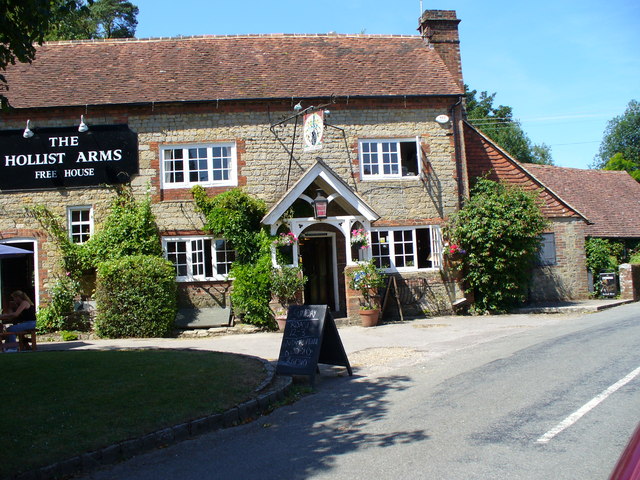




 Posts
Posts


